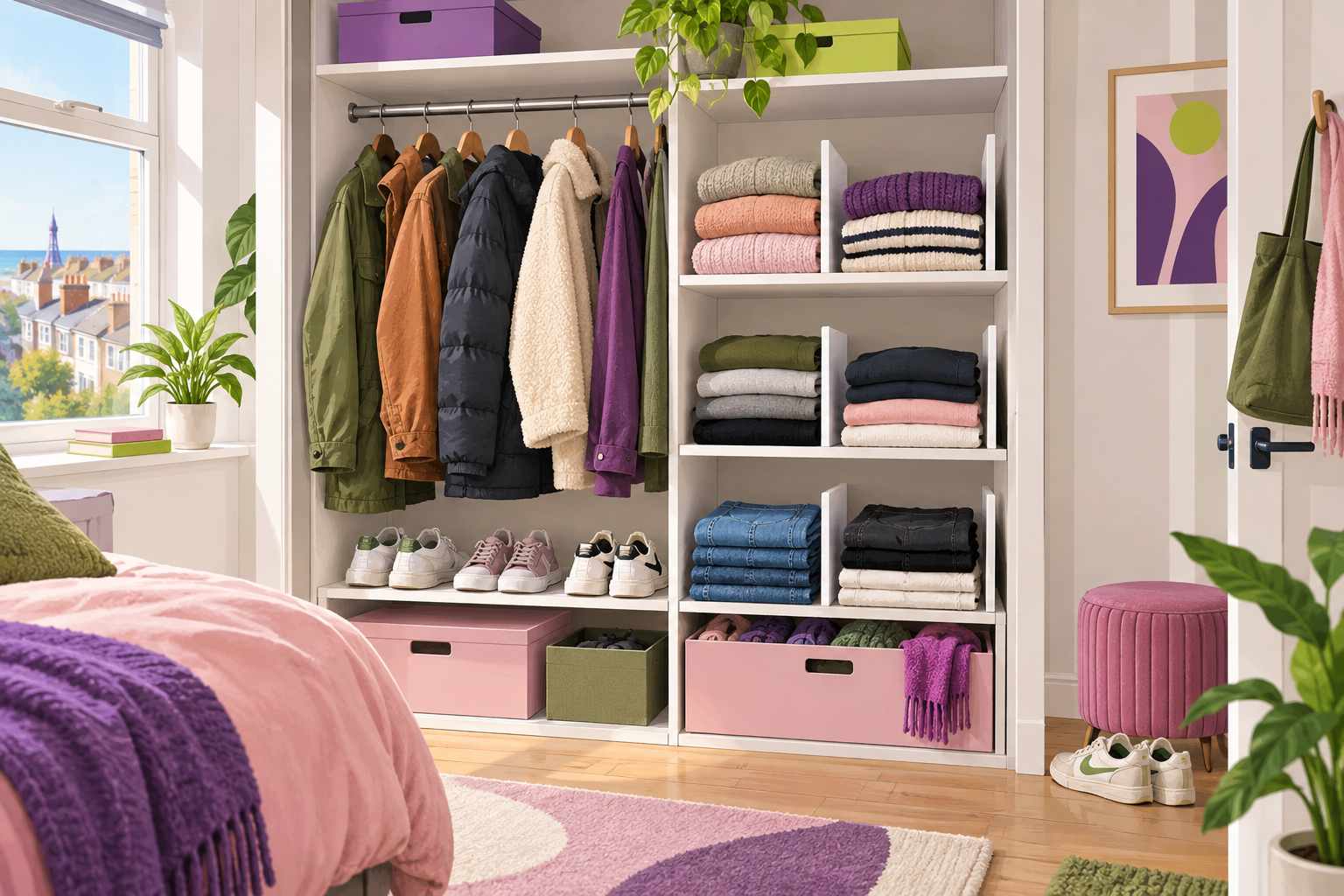
The first chilly mornings often reveal the same problem: the warm things are hard to find, the children’s coats no longer fit and the hallway is trying to hold every season at once. Start with what you need this week.
Check fit before finding storage
Choose one person’s coats, shoes or everyday clothes. Try on anything you are unsure about and check pockets, fastenings and condition. Separate items that are ready to wear from those needing washing, repair or a decision. This prevents you from carefully storing things that will not be useful when you reach for them.
For growing children, keep “fits now” apart from “might fit later”. Label the later box with the size and a reminder to check it, rather than relying on memory. You do not need matching containers; a clear label on a box you already own can do the job.
Give the hallway a realistic capacity
Keep the coat and shoes used most often near the door. Move occasional choices elsewhere if space is tight. A small basket for each person’s gloves or hat is often easier than several tiny compartments, especially when everyone is trying to get out of the house.
Put children’s everyday things where they can reasonably return them. Keep doors and walkways clear. The best arrangement is one your household can use on a wet Tuesday, without someone having to reorganise it every evening.
Store summer clothes ready for their return
Follow the care labels, and make sure clothing is clean and fully dry before putting it away. Keep frequently needed layers accessible; autumn weather does not require a complete seasonal switch in one afternoon.
Label stored clothing by person and type, then note where it lives. If the container is difficult to lift or reach, divide it into smaller loads or choose another position. Storage should make retrieving things easier, not turn it into an obstacle course.
Make repairs and donations finite jobs
Choose a date to deal with the loose button or shoes that need attention. If you are passing items on, check current donation requirements and arrange the handover. Keep undecided pieces in a small, defined space and revisit them before adding more.
You are allowed to keep favourite clothes even when you wear them rarely. The point is to make conscious choices and leave enough room for the things you use every day.
Try it for a week
Notice what still lands on the floor or becomes difficult to find. Adjust that part of the system before buying new storage. If you would like help making your wardrobe or hallway easier to use, tell Amal which space is getting in the way. You do not need to tidy it first.
Explore more stories